Artificial Pancreas to Revolutionise Diabetes Care
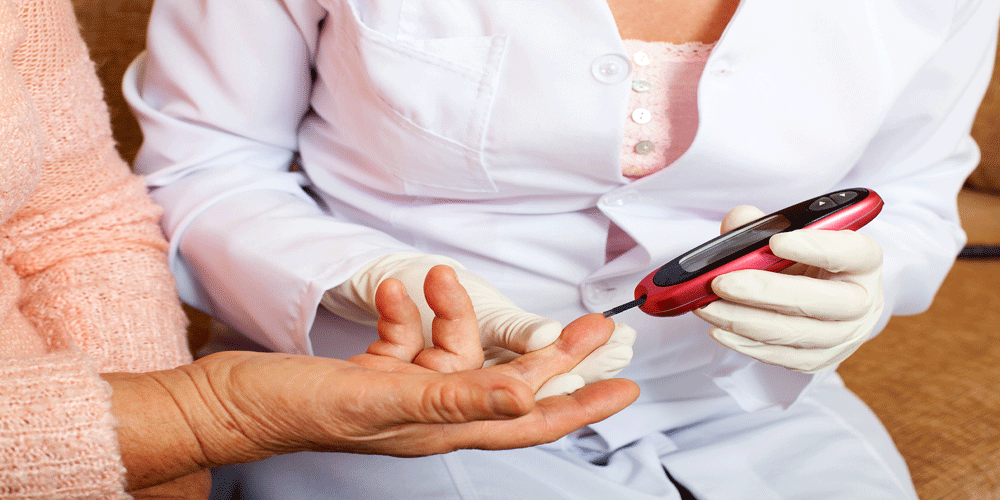
Artificial pancreas to revolutionise diabetes care in England. Nearly 900 patients with type 1 diabetes in England are testing a potentially life-changing artificial pancreas. It can eliminate the need for finger prick tests and prevent life-threatening hypoglycaemic attacks, where blood sugar levels fall too low.
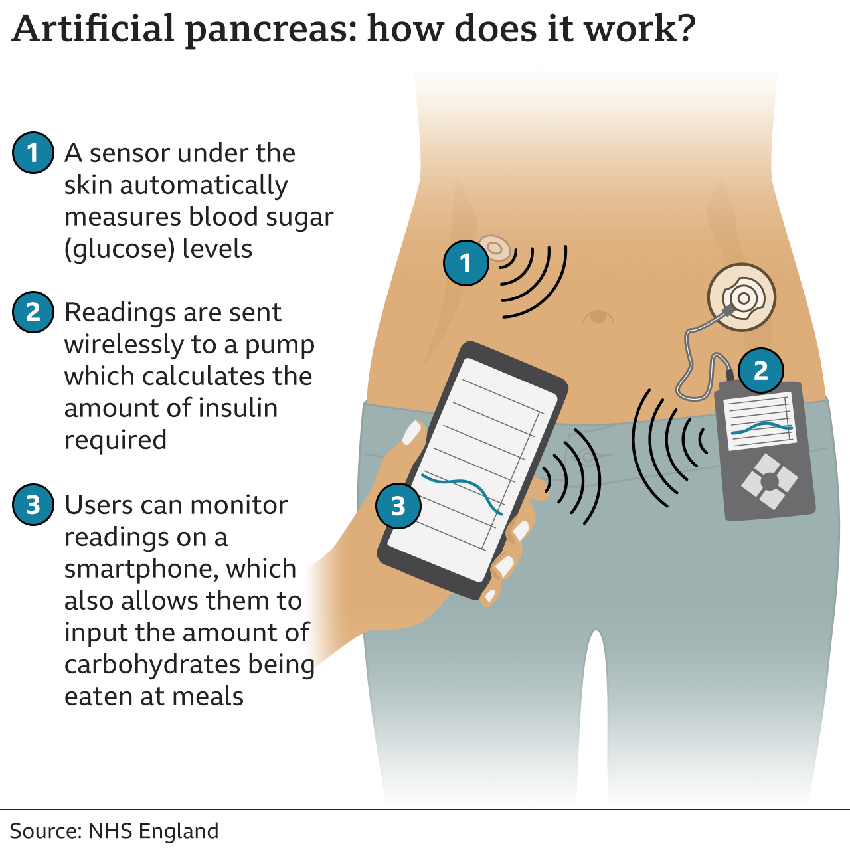
The technology uses a sensor under the skin. It continually monitors the levels, and a pump automatically adjusts the amount of insulin required.
About 400,000 people in the UK have type 1 diabetes, a condition where the body can’t produce insulin, the hormone which regulates blood sugar levels.
NHS England says it is the first nationwide test of the technology in the world, and it comes 100 years after the first diabetes patient received insulin injections.
The hybrid system is not completely automated, because the amount of carbohydrates being eaten at mealtimes needs to be inputted.
Dr May Ng, a paediatric endocrinologist at Ormskirk District General Hospital, thinks the new technology has huge potential.
“I think it’s absolutely fantastic. I’ve been practising for 25 years in children’s diabetes and it’s a game-changer,” she said. “To be able to improve the quality of life, to be able to see that most of their blood glucose readings are within that target range, it’s very exciting.”
If blood sugar levels are not kept under control, diabetes patients risk long-term damage to their heart, kidneys, eyes and nerves.
Prof Partha Kar, NHS national speciality adviser for diabetes, said: “Having machines monitor and deliver medication for diabetes patients sounds quite sci-fi like, but technology and machines are part and parcel of how we live our lives every day.
“It is not very far away from the holy grail of a fully automated system, where people with type 1 diabetes can get on with their lives without worrying about glucose levels or medication.”
Chris Askew, chief executive of Diabetes UK, said: “This technology has the potential to transform the lives of people with type 1 diabetes, improving both their quality of life and clinical outcomes.”
To date, 875 patients have joined the pilot, which will enrol up to 1,000 people. The results will be part of an assessment by the National Institute for Health and Care Excellence, which is considering where to roll out the technology more widely.
It comes after NICE recommended that everyone in England with type 1 diabetes be offered some form of continuous glucose monitoring via a sensor attached to the skin.
Source: BBC News